We were given the assignment to write about anything that we wanted that related to Psychology this week. Our teacher gave us websites for articles to spark our imagination, so I read through the Psychology Today website and stumbled upon an article titled "We Met Yesterday, Will I Like You in 3 months?"
Website link: https://www.psychologytoday.com/us/blog/experimentations/201804/we-met-yesterday-will-i-you-in-3-months
My comments and thoughts are below:
The post begins by saying "[whenever] we meet someone, we have some feelings about whether we like the other person, and if so, how much."
It further says that "This immediate attraction doesn’t have to be romantic" and that "[as] long as there is a reasonably chance of a significant relationship in the future, we will notice the feeling of affection."
The fact that this is true in peoples' lives means that people are pretty gullible into having feelings for someone in the short amount of time that they just met them in. Knowing this, I should probably be more attentive to my feelings towards others and not be so soon to decide whether or not I like the other person (I've been hurt a couple times by befriending someone and then being blindsided when I get backstabbed or lied to).
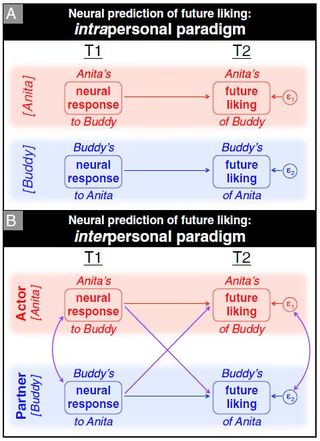
"We pay attention to how much we think the other person likes us and that is part of how much we like them. When we know that the affection is mutual, it adds to the intensity of the experience, a feedback loop called “affective” (emotional) or “dyadic” reciprocity."
This quote is really interesting because it claims that the feeling of liking someone is usually dependent on how much you think the other person likes you. Because this fact was scientifically proven, I pondered a bit more and discovered that I'm not committed to deepening relationships that the other feels no interest in deepening, so the discovery is probably applicable to my life as well.
"The study authors elegantly demonstrate that mutual affection is a unique property of the relationship, based upon shared experiences of mutual affection which grow and deepen over time as a result of unique interactional factors."
Applying the quote from earlier, relationships arise from the "reciprocity" of the feelings and according to the quote directly above, strengthen because of future shared experiences from interactions. This would mean that acting upon those "early feelings" would lead to a deeper sense of connection and strengthen the relationship over time, growing the mutual affection within the relationship.
"two minds come to think as one, and moreover, the relationship takes on a life of its own as the whole becomes greater than the sum of its parts."
The article talks about the relationship as a separate and personified identity that has a mind of its own. Growing from the shared experiences and individual experiences of the individual, the relationship begins to transcend physical boundaries and grow into a sort of "supernatural" or "implied" bond. This is the stage in a relationship where one can indicate that the relationship will persist into the future.
In conclusion-
Knowing this information will teach me 3 things:
1. To not succumb to my initial feelings because everyone experiences the "spark" early, it doesn't have any indication to future success of the relationship.
2. Relationships are a game of perceptions. If you don't perceive the other person to like you back, the relationship won't succeed, and vice versa.
3. Shared and individual experiences all culminate into a relationship and can grow to transcend the real world.
Thanks for reading my blog.
Ryan.
Website link: https://www.psychologytoday.com/us/blog/experimentations/201804/we-met-yesterday-will-i-you-in-3-months
My comments and thoughts are below:
The post begins by saying "[whenever] we meet someone, we have some feelings about whether we like the other person, and if so, how much."
It further says that "This immediate attraction doesn’t have to be romantic" and that "[as] long as there is a reasonably chance of a significant relationship in the future, we will notice the feeling of affection."
The fact that this is true in peoples' lives means that people are pretty gullible into having feelings for someone in the short amount of time that they just met them in. Knowing this, I should probably be more attentive to my feelings towards others and not be so soon to decide whether or not I like the other person (I've been hurt a couple times by befriending someone and then being blindsided when I get backstabbed or lied to).
"We pay attention to how much we think the other person likes us and that is part of how much we like them. When we know that the affection is mutual, it adds to the intensity of the experience, a feedback loop called “affective” (emotional) or “dyadic” reciprocity."
This quote is really interesting because it claims that the feeling of liking someone is usually dependent on how much you think the other person likes you. Because this fact was scientifically proven, I pondered a bit more and discovered that I'm not committed to deepening relationships that the other feels no interest in deepening, so the discovery is probably applicable to my life as well.
"The study authors elegantly demonstrate that mutual affection is a unique property of the relationship, based upon shared experiences of mutual affection which grow and deepen over time as a result of unique interactional factors."
Applying the quote from earlier, relationships arise from the "reciprocity" of the feelings and according to the quote directly above, strengthen because of future shared experiences from interactions. This would mean that acting upon those "early feelings" would lead to a deeper sense of connection and strengthen the relationship over time, growing the mutual affection within the relationship.
The graph the researchers used to display their findings
https://www.psychologytoday.com/us/blog/experimentations/201804/we-met-yesterday-will-i-you-in-3-months
"two minds come to think as one, and moreover, the relationship takes on a life of its own as the whole becomes greater than the sum of its parts."
The article talks about the relationship as a separate and personified identity that has a mind of its own. Growing from the shared experiences and individual experiences of the individual, the relationship begins to transcend physical boundaries and grow into a sort of "supernatural" or "implied" bond. This is the stage in a relationship where one can indicate that the relationship will persist into the future.
In conclusion-
Knowing this information will teach me 3 things:
1. To not succumb to my initial feelings because everyone experiences the "spark" early, it doesn't have any indication to future success of the relationship.
2. Relationships are a game of perceptions. If you don't perceive the other person to like you back, the relationship won't succeed, and vice versa.
3. Shared and individual experiences all culminate into a relationship and can grow to transcend the real world.
Thanks for reading my blog.
Ryan.
Comments
Post a Comment